In the expansive universe of Star Citizen, immersion is paramount. Every moon, planet, and space station is designed to tell a story, and a crucial element of that narrative is architecture. The way structures are built reflects the history, culture, resources, and priorities of the people who inhabit them.
From the rugged frontiers to the gleaming core worlds and the mysterious territories of alien civilizations, distinct architectural styles shape not only the visual landscape but also the gameplay experience - grounding players in a living, breathing galaxy.
"In the 'Verse, a building is never just a building; it is a declaration of intent, a monument to survival, or a shadow cast by the powers that be."
Utilitarian Industrialism: The Frontier Standard
This style is the ubiquitous face of humanity's expansion into the stars. Characterized by modularity, exposed framework, and a reliance on durable, easily transportable materials like metal and concrete, Utilitarian Industrialism prioritizes function above all else. Structures are often prefab, bolted together hastily to establish a foothold on hostile worlds. You'll find this style dominating outposts, mining facilities, and nascent colonies across the 'Verse, from the dusty moons of Crusader like Daymar to the icy research stations of microTech. The aesthetic is gritty and unpolished, a testament to the harsh realities of frontier life where survival is the primary concern.
"In the frontier, we don't build for beauty. We build so the atmosphere doesn't reclaim our lungs."
— Silas Koerner, Independent Surveyor
The lore behind this style is rooted in the United Empire of Earth's (UEE) rapid and often chaotic expansion. As humanity pushed further out, the need for quick, reliable, and cost-effective infrastructure became paramount. These structures tell a story of resource scarcity, corporate pragmatism, and the indomitable human spirit facing the unknown. They are not meant to be beautiful; they are meant to endure radiation, vacuum, and alien environments. This style serves as a constant visual reminder of the thin line between civilization and the untamed void, reinforcing the "wild west" feel of the galaxy's edge.
From a gameplay perspective, Utilitarian Industrialism creates dense, intricate environments perfect for close-quarters engagements. The maze-like corridors, cluttered hangars, and multi-level industrial platforms offer numerous flanking routes and cover options for first-person shooter combat. The functional design also introduces environmental hazards like exposed wiring, steam vents, and heavy machinery, adding another layer of tactical depth. The flavor is one of isolation and hard labor, immersing players in the role of a rugged pioneer or a gritty mercenary scraping by on the edge of civilized space.
Terran Neo-Classical: The Core World Pinnacle
In stark contrast to the frontier's grit is the Terran Neo-Classical style, a beacon of wealth, culture, and established power. This architecture is defined by sweeping curves, gleaming white materials, expansive use of glass, and the integration of lush greenery. It draws inspiration from classical Earth architecture but reinterprets it through a futuristic lens, creating a sense of utopian grandeur. The prime example of this style is the landing zone of Prime on the planet Terra, a glittering jewel that rivals Earth itself. It can also be seen in high-end corporate headquarters and luxury hab-blocks in major economic hubs.
In the lore, this style represents the zenith of human achievement within the UEE. It flourishes in systems that have enjoyed centuries of peace, stability, and economic prosperity. The use of premium materials and the emphasis on aesthetics over pure function is a deliberate display of power and cultural superiority. It reflects a society that has moved beyond mere survival and is now focused on art, politics, and the projection of a unified, civilized identity. The style's resemblance to ancient Earth designs is a deliberate callback, a way for the UEE to assert its legitimacy as the inheritor of human history.
"To walk through Prime is to walk through a dream of Old Earth, polished and perfected by three centuries of untainted prosperity."
— Travelogue: The Jewel of the Kilian Cluster
Gameplay-wise, Terran Neo-Classical environments offer a very different experience. The spaces are wide-open, characterized by grand plazas, soaring towers, and uncluttered promenades. This verticality and openness encourage exploration and provide stunning vistas, creating a sense of awe and scale. While combat can still occur, these locations are often designed as social hubs, places for players to trade, accept missions, and engage in political intrigue. The flavor here is one of safety, opulence, and high society, offering a striking counterpoint to the dangerous life of a spacer and reinforcing the vast inequalities that exist within the UEE.
Independent: The Scrap-Pioneer Frontier
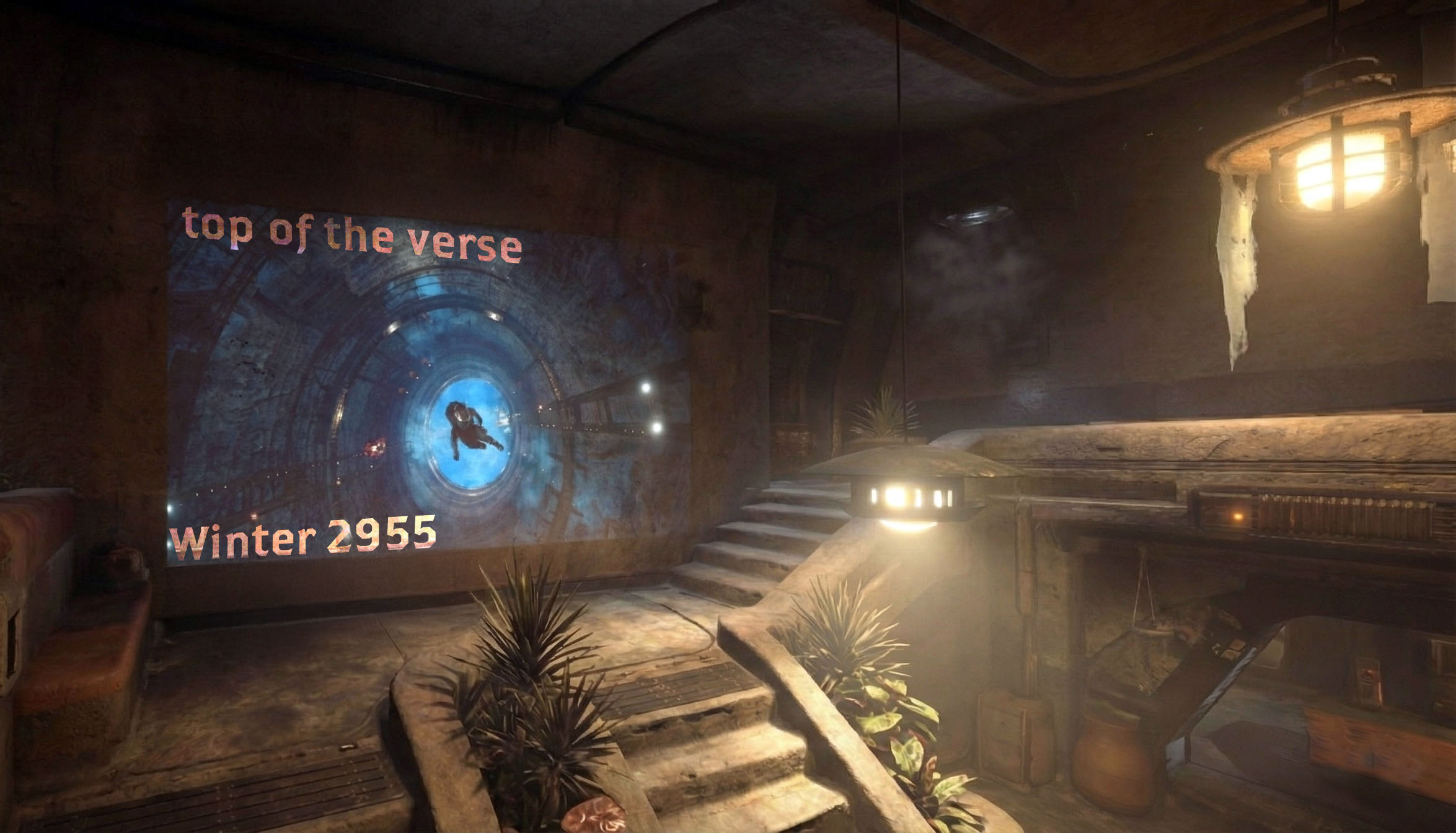
The Colonialism/Independent style represents the gritty reality of life on the edge of the UEE. Unlike the standardized modules of the core worlds, Colonial architecture is defined by "kit-bashing" and improvisation. Structures often appear as a patchwork of scavenged hull plating, repurposed shipping containers, and ruggedized survival gear. This style is most prevalent in lawless or frontier systems like Pyro, where the lack of corporate oversight forces settlers to build with whatever they can find. The aesthetic is one of desperation mixed with ingenuity, featuring rusted alloys, exposed ventilation, and reinforced struts.
"We don’t use blueprints here. We use whatever the scrap yard gave us and a prayer that the welds hold through the next solar flare."
— Jeb Corland, Pyro Settler
In terms of lore, Colonialism is the visual language of the "discarded." It tells the story of independent settlers and refugees who have fled the rigid structure of the UEE to carve out a life in the fringe. These outposts often serve as the centers of trade for smugglers and independent miners. The architecture reflects a culture of self-sufficiency where functionality is born from necessity rather than corporate design. It brings a sense of lawlessness and "lived-in" history to the game, making the frontier feel like a place where every bolt and panel has a story of survival behind it.
"Colonial architecture is the art of making 'broken' work. It’s ugly, it’s patched, and it’s the only home we’ve got."
— Diary of a Frontier Refugee
Gameplay impacts for Colonialism are centered around exploration and base-building. Because these structures are often modular and "imperfect," they offer a more tactical environment for ground combat, with plenty of non-standard cover and verticality provided by stacked crates and makeshift catwalks. For players interested in the upcoming base-building mechanics, the Colonial style will likely be the starting point, requiring fewer high-end resources than more advanced styles. It creates a gameplay loop where players must maintain and "patch" their homes, reinforcing the survivalist flavor that makes the frontier so distinct.
Hennowism: The Brutalist Legacy
Hennowism is a historical human architectural style that rose to prominence in the 26th century, often associated with the early expansionist era and the rise of the Messer dynasty. It is characterized by its heavy, monolithic forms and a focus on grand symmetry. Imagine "Brutalism in space"—massive concrete-like slabs, sharp geometric angles, and a feeling of overwhelming permanence. You are most likely to encounter Hennowism in older, established UEE systems where the government sought to project a sense of immovable authority. It is the architecture of a state that wants its citizens to feel small.
The lore implications of Hennowism are deeply tied to the political climate of the 2500s. It was a time of aggressive human expansion and the centralization of power. The style was intended to be "timeless" and "invulnerable," a reaction to the perceived fragility of earlier colonial efforts.
Hennowist structures are often found housing planetary governments, ancient military academies, or the massive data centers of the UEE. When you step into a Hennowist hall, you are stepping into the "Old Empire," a place where the weight of history and the rigidity of law are felt in the very thickness of the walls.
"The Messers wanted the people to feel the weight of the Empire. Hennowism ensured that even the air felt heavy inside those halls."
— Historical Analysis: Architecture of the 26th Century
From a gameplay perspective, Hennowist locations are designed to be imposing and difficult to navigate. Their symmetrical layouts can be disorienting during high-stakes missions, and their sheer scale provides massive interior spaces for large-scale firefights or formal social gatherings. The "flavor" it brings is one of cold, bureaucratic power. Unlike the modular Colonial style, Hennowist buildings are not meant to be changed or repaired easily; they are built to last for centuries. This makes them perfect "dungeon" environments for missions involving corporate espionage or the recovery of ancient UEE archives.
High-Tech: The Silicon Pinnacle
The High-Tech style is defined by its clean lines, advanced composite materials, and pervasive use of holography and integrated technology. This style is most famously represented by New Babbage on microTech, where the environment feels like a high-end research facility fused with a luxury resort. It prioritizes sleekness and smooth surfaces, often utilizing translucent plastics, carbon fiber, and glowing light strips to create an atmosphere of progress. Everything is polished to a mirror sheen, suggesting a world where the physical and digital are seamlessly blended.
In the lore, High-Tech architecture is the playground of the corporate elite and the scientific community. It represents the cutting edge of human innovation, where the UEE’s technological might is on full display. These structures are often found in systems dominated by R&D corporations or in habitats where the natural environment is so hostile that only the most advanced engineering can sustain life. The style suggests a culture that values efficiency, data, and the mastery of nature through science, often masking the cold reality of corporate control behind a beautiful, glowing facade.
"In New Babbage, the line between the physical wall and the digital interface has effectively ceased to exist."
— Internal Memo, microTech Design Group
Gameplay in High-Tech areas often involves interacting with complex systems. These locations are filled with interactive terminals, secure data vaults, and high-speed transit systems. The clean, open layouts provide excellent sightlines for long-range engagements, but the reliance on glass and thin composites means that cover can be fragile. The flavor is one of clinical perfection and silent power, providing a setting for high-stakes hacking missions or negotiations between the galaxy's most powerful corporate players.
Monumentalism: The Messer Iron Fist
Monumentalism is the architectural embodiment of the Messer era’s fascistic regime. It takes the heavy forms of Hennowism and elevates them to a terrifying scale, focusing on intimidation and the glorification of the state. This style is defined by massive statues, enormous banners, and soaring, jagged spires that dominate the skyline. You will find Monumentalist structures in systems that were core to the Messer regime's power base, often repurposed today into UEE military installations or high-security prisons. It is architecture as a weapon of psychological warfare.
"The scale is the point. You aren't supposed to feel like a guest; you are supposed to feel like a subject."— Commentary on the 'Grand Plaza of the Imperator'
Lore-wise, Monumentalism serves as a grim reminder of a dark chapter in human history. Built during a time of absolute rule, these structures were designed to project the personal power of the Imperators. Every archway and pillar was meant to evoke fear and obedience. While the UEE has moved away from this ideology, the buildings remain, too massive to easily tear down. They stand as monuments to a past that many wish to forget, housing the remnants of the old military-industrial complex and serving as a warning against the return of autocracy.
From a gameplay standpoint, Monumentalist structures serve as formidable fortresses. Their thick walls and narrow, defensible entrances make them ideal locations for siege gameplay or infiltration missions. The scale is often so vast that vehicles can be driven through the corridors, leading to unique combined-arms combat scenarios indoors. The flavor is one of oppression and ancient, brooding danger, making these sites feel like the "castles" of the sci-fi world, filled with secrets and the echoes of a tyrannical regime.
Xi'an Architecture: The Vertical Zenith
The Xi'an architectural style is a testament to an ancient, highly structured, and technologically advanced alien civilization. It is defined by extreme verticality, rotating components, and the use of sophisticated ceramic alloys and dark, iridescent metals. Unlike human designs, Xi'an buildings often appear to defy gravity, with segments that can shift or spin to adjust to different atmospheric conditions or ceremonial needs. This style is most prominent in the Xi'an Empire’s core systems, characterized by an orderly, almost rhythmic placement of towers that stretch high into the clouds.
In the lore, this architecture reflects the Xi'an's long-lived nature and their deep respect for tradition and hierarchy. Every structure is built with a lifespan of centuries in mind, utilizing materials that do not decay and designs that have remained largely unchanged for millennia. The shifting, rotating nature of their buildings is more than just aesthetic; it represents the Xi'an's philosophy of constant, measured movement within a fixed social order. To a human observer, these cities can feel serene yet deeply alien, a visual representation of a species that views time and progress on a scale vastly different from our own.
"Human buildings sit on the dirt. Xi'an buildings hover above it, as if the ground itself is beneath their dignity."
— Diplomatic attache to Rize System
Gameplay in Xi'an environments emphasizes vertical navigation and spatial awareness. The frequent use of lifts, gravity-defying platforms, and rotating rooms creates a unique "3D" exploration experience where the ceiling can become the floor with the press of a button. These areas are often filled with intricate puzzles that require manipulating the building's moving parts to progress. The flavor is one of calm, disciplined power, providing a stark contrast to the chaotic energy of human cities and offering players a chance to experience a truly alien way of inhabiting space.
Banu Architecture: The Organic Tapestry
The Banu architectural style is as vibrant and eclectic as the Banu themselves. Eschewing the rigid lines of human or Xi'an designs, Banu structures have an "organic" or "melted" appearance, often described as if they were grown or sculpted rather than built. Materials range from warm, hammered metals and ornate wood carvings to vibrant fabrics and glowing bioluminescent elements. No two Banu buildings are exactly alike, as they are often the result of centuries of modifications, hand-crafted additions, and the blending of styles from different "souli" (guilds).
Lore-wise, this architecture is a direct reflection of the Banu's mercantile and communal culture. Their cities are massive, bustling marketplaces where every home doubles as a workshop or storefront. The lack of a centralized government means that Banu architecture is driven by individual creativity and the needs of the trade. These structures often incorporate technology from other races, "Banu-fied" with decorative flourishes and practical modifications. It tells a story of a culture that values the journey, the deal, and the tangible artifacts of history over abstract ideology or long-term permanence.
From a gameplay perspective, Banu locations are a sensory overload, designed as dense, labyrinthine hubs for trading and social interaction.
"Trying to find a straight line in a Banu city is like trying to find a quiet corner in a riot. It’s all flow, all fabric, and all business."
— UEE Merchant Marine Officer
Navigating a Banu city requires a keen eye, as the "melted" aesthetic can hide entrances and paths in plain sight. These areas are the best places to find rare alien components and exotic goods, but they are also rife with opportunities for pickpockets and deal-seekers. The flavor is one of warmth, chaos, and endless discovery, making the player feel like they have stepped into a galactic bazaar that has been thriving for eons.
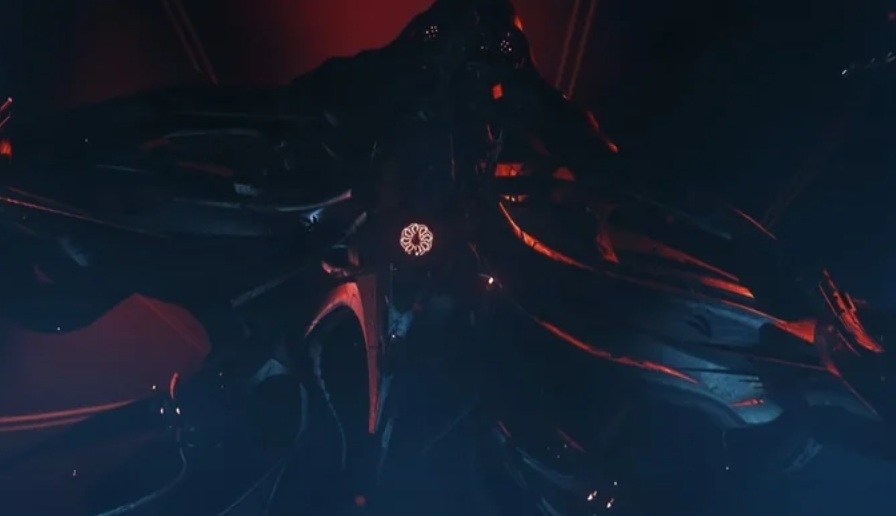
Vanduul Architecture: The Predatory Shard
Vanduul architecture is the physical manifestation of a nomadic, warrior-driven culture that values strength, utility, and the hunt above all else. It is characterized by jagged, knife-like shapes, the use of dark, unpolished metals, and a distinct lack of decorative flourish. Buildings—and indeed their ships, which often serve as mobile habitats—frequently incorporate "bone-like" structural supports and sharp, aggressive angles. There is a sense of "functional savagery" to their designs, where every spire and protrusion looks like it could double as a weapon or a defensive spike.
In the lore, Vanduul architecture is rarely permanent. As a nomadic species, their "buildings" are often massive capital ships or temporary outposts established on conquered worlds to harvest resources. Their style is remarkably consistent across different clans, suggesting a deeply ingrained cultural or perhaps even biological imperative to build in this predatory fashion. These structures represent a threat to all other civilizations, standing as silent sentinels of a species that does not negotiate, does not trade, and only exists to expand its territory through the strength of its blades.
"It doesn't look like a habitat; it looks like a ribcage. Stepping inside a Vanduul spire feels like being swallowed by a predator."
— Squadron 42 Reconnaissance Report
Gameplay-wise, Vanduul environments are extremely hazardous and disorienting. The interiors are often dark, filled with narrow, jagged corridors and vertical shafts that favor the Vanduul’s superior agility and strength. Combat in these areas is brutal and high-stakes, as the environment itself can be as dangerous as the enemies within. There is very little "comfort" to be found in a Vanduul structure; everything is built for efficiency and war. The flavor is one of pure, primal terror, turning every mission into a desperate struggle for survival against an uncompromising foe.
Conclusion
Whether it is the cobbled-together survivalism of a Colonial outpost or the oppressive, monolithic grandeur of a Hennowist government hub, the architecture of Star Citizen is a silent narrator of the galaxy's history. These styles do more than just provide a backdrop for the action; they dictate the flow of combat, the vibe of social interactions, and the player’s sense of place within the 'Verse. As the game continues to grow, these diverse architectural languages—including the starkly different philosophies of the Xi'an, Banu, and Vanduul—will ensure that moving between systems feels like traveling through different eras and cultures, keeping the universe feeling vast, complex, and incredibly real.
"Beauty is a luxury the frontier can't afford. If it seals, holds pressure, and keeps the sand out, it’s a masterpiece."
— Foreman 'Rusty' Miller, Shubin Interstellar
With the lore as the guiding principle of development, the seemingly innocuous or irrelevant narrative behind the setting will have real effect on gameplay. Each artificial environment will come with certain advantages, strategies, and considerations that will change players' approach to moving through, interacting within, and dealing with them. Knowing what to expect will give you a leg up and prepare you for success in the verse.
| Style |
Primary Materials |
Key Locations |
Gameplay Vibe |
| Utilitarian |
Metal, Concrete, Prefab Panels |
Daymar, Industrial Outposts |
Gritty, claustrophobic, functional |
| Neo-Classical |
White Marble, Glass, Greenery |
Prime (Terra), Corporate Hubs |
Opulent, open, socially focused |
| Colonialism |
Scavenged Hull, Shipping Containers |
Pyro System, Frontier Settlements |
Survivalist, cluttered, lawless |
| Hennowism |
Monolithic Slabs, Heavy Alloys |
Old UEE Government Hubs |
Brutalist, imposing, bureaucratic |
| High-Tech |
Composites, Carbon Fiber, Holograms |
New Babbage (microTech) |
Clinical, sleek, interactive |
| Monumentalism |
Heavy Stone, Jagged Metal |
Military Fortresses, Messer Ruins |
Oppressive, terrifying, defensive |
| Xi'an |
Ceramic Alloys, Iridescent Metals |
Xi'an Empire Core Systems |
Vertical, rhythmic, gravity-defying |
| Banu |
Hammered Metals, Wood, Biolume |
Banu Flotillas, Trade Centers |
Warm, organic, chaotic bazaar |
| Vanduul |
Dark Alloys, Bone-like Supports |
Vanduul Warships, Outposts |
Predatory, hazardous, sharp |